Starting a business in India often begins with choosing the right legal structure. Among all available options, a Private Limited Company remains the most preferred choice for entrepreneurs, startups, and growing businesses. It offers credibility, limited liability, and better access to funding.
If you are planning to register a Private Limited Company in India, understanding the process, documentation, and compliance requirements is essential. This guide walks you through everything in a clear and practical way.
What is a Private Limited Company?
A Private Limited Company is a legally recognised business entity registered under the Companies Act, 2013. It is treated as a separate legal entity, meaning the company has its own identity distinct from its owners.
- Limited liability protection for shareholders
- Separate legal identity
- Ability to raise funding from investors
- Perpetual succession
Because of these advantages, most startups and scalable businesses prefer this structure.
Eligibility Criteria for Pvt Ltd Company Registration
Before starting the Pvt Ltd Company Registration process, make sure you meet the basic requirements:
- Minimum 2 directors (at least one must be an Indian resident)
- Minimum 2 shareholders (can be the same as directors)
- Registered office address in India
- No minimum capital requirement
Both Indian residents and foreign nationals are allowed to become directors or shareholders, subject to compliance rules.
Documents Required for Registration
Having the correct documents ready will speed up the process significantly.
For Directors and Shareholders:
- PAN Card (for Indian nationals)
- Passport (mandatory for foreign nationals)
- Address proof (bank statement or utility bill)
- Passport-size photograph
For Registered Office:
- Electricity bill or utility bill
- Rent agreement (if rented)
- No Objection Certificate (NOC) from owner
Step-by-Step Process for Pvt Ltd Company Registration
Step 1: Obtain Digital Signature Certificate (DSC)
All proposed directors must obtain a Digital Signature Certificate. This is required to sign documents electronically during the registration process.
Step 2: Apply for Director Identification Number (DIN)
DIN is a unique identification number issued to directors. It is mandatory for anyone who wants to become a company director in India.
Step 3: Name Approval
Select a unique and meaningful company name and apply for approval through the Ministry of Corporate Affairs (MCA) portal. Ensure the name does not conflict with existing companies or trademarks.
Step 4: Draft Incorporation Documents
Prepare key documents such as:
- Memorandum of Association (MoA)
- Articles of Association (AoA)
These documents define the company’s objectives and internal structure.
Step 5: File SPICe+ Form
Submit the incorporation application using the SPICe+ form along with all required documents. This integrated form also includes PAN, TAN, and other registrations.
Step 6: Certificate of Incorporation
Once approved, the Registrar of Companies (ROC) issues the Certificate of Incorporation. This confirms that your company is legally registered.
Step 7: Post-Registration Compliance
- Open a company bank account
- Apply for GST registration (if applicable)
- Maintain statutory records
Time Required for Company Registration
The entire process usually takes 7 to 12 working days, depending on document verification and approval timelines. Delays can happen if documents are incomplete or require corrections.
Cost of Pvt Ltd Company Registration in India
The cost of registration varies depending on professional fees and government charges. On average:
- Government fees: ₹6,000 – ₹10,000
- Professional fees: ₹5,000 – ₹15,000
While low-cost options are available online, it is advisable to choose reliable professionals to avoid compliance issues later.
Benefits of Registering a Private Limited Company
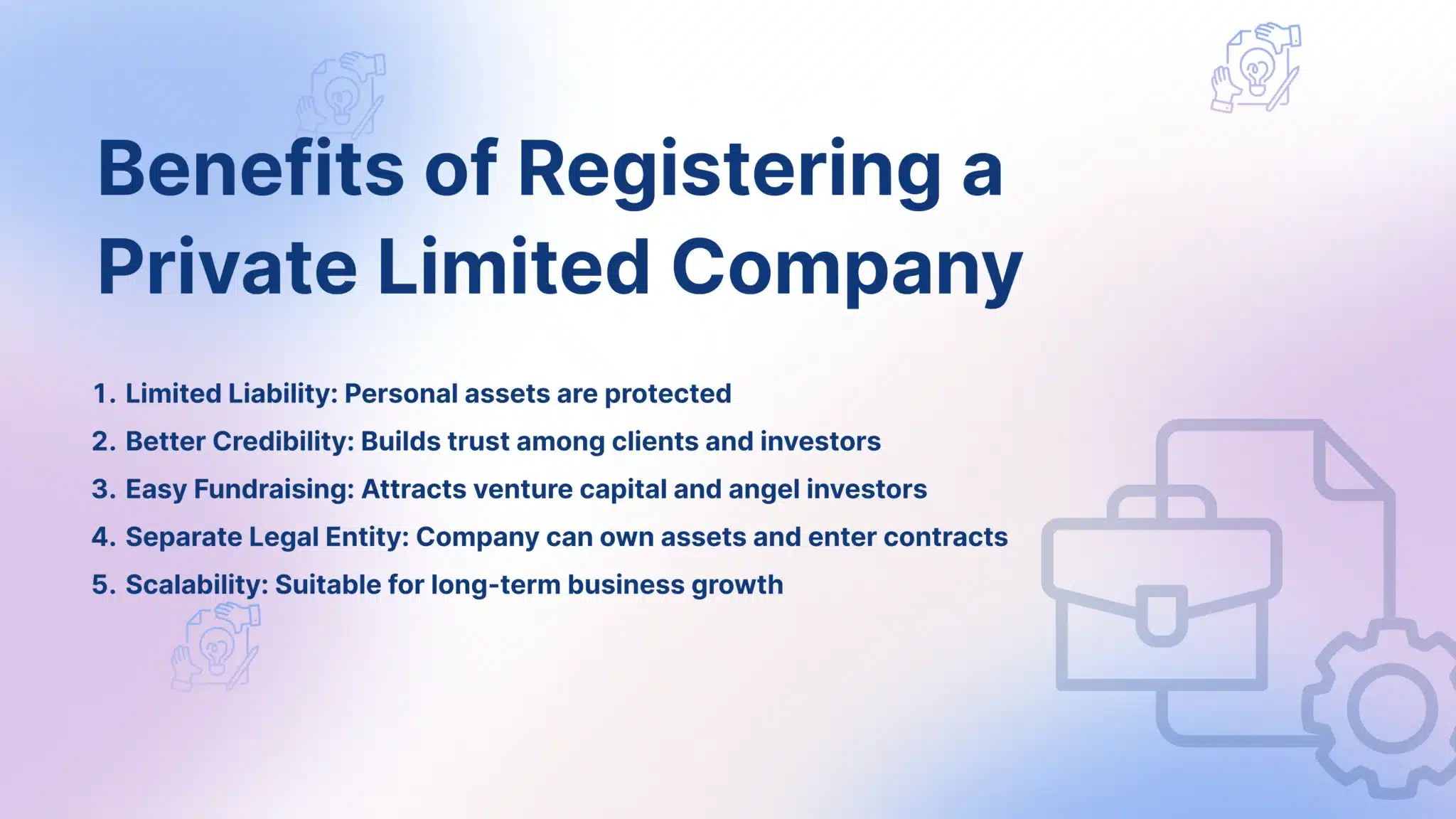
- Limited Liability: Personal assets are protected
- Better Credibility: Builds trust among clients and investors
- Easy Fundraising: Attracts venture capital and angel investors
- Separate Legal Entity: Company can own assets and enter contracts
- Scalability: Suitable for long-term business growth
Compliance Requirements After Registration
Once your company is registered, ongoing compliance is essential:
- Annual return filing with MCA
- Income tax return filing
- Statutory audit
- Board meetings and record maintenance
Ignoring compliance can lead to penalties and legal complications, so it is important to stay consistent.
Common Mistakes to Avoid
- Choosing an incorrect business structure
- Submitting incomplete or incorrect documents
- Ignoring post-registration compliance
- Selecting a name without proper research
A small mistake during registration can lead to delays or rejection, so careful planning is key.
Final Thoughts
Getting a Pvt Ltd company registration in India is a structured and straightforward process when done correctly. With the right documentation, proper guidance, and timely compliance, you can establish a strong legal foundation for your business.
Whether you are a startup founder or an established entrepreneur, a Private Limited Company offers the flexibility and credibility needed to grow in today’s competitive market.
Ready to register your Private Limited Company without stress?
Partner with FinGuru India for expert support at every step—from documentation and name approval to final incorporation and compliance. With the right guidance, you can focus on building your business while the experts handle the legal process smoothly.